


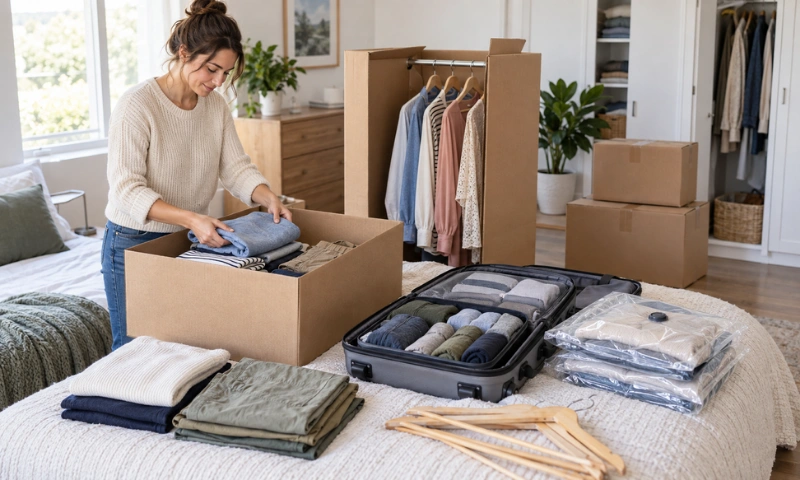
Moving clothes can seem simple, but without the right method, they can take up too much space, become wrinkled, or get mixed up during the move. With a little planning and the right approach, packing your wardrobe can be much easier.
From sorting and decluttering to choosing the right packing method, there are several ways to keep your clothes organised and protected. If you prefer to have the packing handled for you, you can also use our moving packing services for professional help.
In this guide, we’ll cover the best ways to pack clothes for moving, including folding, rolling, hanging clothes, protecting delicate items, labelling boxes and preparing an essentials bag.
How to Prepare Your Clothes Before Packing

Before putting everything into boxes, take some time to sort through your wardrobe. Packing clothes you no longer wear only adds extra boxes and makes unpacking harder.
Start by separating your clothes into a few simple groups:
- Keep: Clothes you regularly wear or plan to use in your new home.
- Donate: Good-quality clothes that no longer fit or are not needed.
- Discard: Damaged or worn-out clothing that is no longer useful.
- Essentials: Clothes, sleepwear and shoes you will need during the move and immediately after arrival.
Once you have sorted everything, organise the clothes by season, type or person. This will make packing easier and help you find what you need when unpacking.
Set Aside Clothes You Need First
Keep a small selection of clothes separate instead of packing your entire wardrobe. Include a few outfits, underwear, sleepwear, comfortable shoes and anything else you may need during the first few days.
This can go into an essentials bag or suitcase so you do not have to search through packed boxes after reaching your new home.
What Packing Materials Do You Need for Clothes?
Choosing the right packing materials can help protect your clothes, save space and make unpacking easier. You do not need expensive supplies for most clothing, but having the right containers for different types of clothes can make a big difference.
Packing Material | Best For | Main Benefit |
Cardboard boxes | Folded everyday clothes | Easy to stack and label |
Suitcases | Heavy or bulky clothes | Strong and easy to transport |
Vacuum bags | Winter clothes and bulky items | Saves storage space |
Wardrobe boxes | Hanging clothes | Keeps clothes on hangers |
Garment bags | Suits, dresses and delicate items | Provides extra protection |
Tissue paper | Delicate fabrics | Helps reduce wrinkles and friction |
Plastic bags | Shoes and small accessories | Keeps items separated |
Choose the container based on the type of clothing rather than putting everything into one large box. This keeps the weight manageable and makes it easier to organise your new wardrobe.
How to Pack Different Types of Clothes

Different clothes need different packing methods. Everyday clothing can usually be folded or rolled, while delicate and formal items may need additional protection.
Everyday Clothes
Fold or roll T-shirts, jeans, casual tops and other everyday clothing. Rolling can help make better use of space, while folding works well for structured or heavier garments.
Pack similar items together so you can quickly identify what is inside each box.
Bulky Winter Clothes
Winter jackets, sweaters and coats can take up a lot of space. Vacuum bags can be useful for compressing suitable clothing, while suitcases can also be used for heavier items.
Avoid overfilling boxes with bulky clothes because they can become difficult to lift.
Hanging Clothes
For suits, dresses, shirts and other garments that are normally kept on hangers, wardrobe boxes are a convenient option. Transfer the clothes directly from your wardrobe into the box while keeping them on their hangers.
This can reduce folding and help keep garments ready to hang in your new wardrobe.
Delicate and Formal Clothes
Delicate dresses, suits and special garments should be packed separately from everyday clothes. Use garment bags or clean protective material to reduce the chance of snagging, dust or wrinkles.
Do not place heavy items on top of delicate clothing.
Shoes and Accessories
Clean shoes before packing them and keep them separate from clean clothes. Use shoe boxes or individual bags where possible.
Small accessories such as belts, scarves and bags can be grouped together so they do not get lost between larger items.
Should You Roll or Fold Clothes When Moving?
Both rolling and folding can work well. The better option depends on the type of clothing and how you plan to pack it.
Method | Best For | Advantages |
Folding | Jeans, sweaters and structured clothes | Keeps items organised |
Rolling | T-shirts, casual clothes and soft fabrics | Can save space |
Hanging | Suits, dresses and shirts | Reduces unnecessary folding |
Vacuum sealing | Bulky seasonal clothes | Reduces volume |
Separate packing | Delicate or valuable clothing | Provides extra protection |
For most moves, using a combination of these methods is more practical than relying on just one.
How to Pack Clothes Efficiently in Boxes
Once your clothes are sorted, pack them according to their weight, size and type. This helps you make better use of the available space while keeping the boxes easy to carry.
Start with heavier clothes such as jeans, jackets and sweaters. Place lighter items on top and use smaller pieces to fill any empty spaces.
Keep these points in mind:
- Do not overfill the box, as it can become too heavy to lift.
- Pack similar clothes together so they are easier to find later.
- Leave enough space to remove clothes without pulling everything out.
- Use smaller boxes for heavier clothing and larger boxes for lighter items.
- Label each box according to its contents and the room it belongs to.
For example, you could pack everyday clothes in one box and winter clothing in another. This simple organisation will make unpacking much easier.
How to Protect Delicate Clothes During a Move
Delicate clothing needs extra care during packing and transportation. Dresses, suits, formalwear and sensitive fabrics can easily become wrinkled, snagged or damaged when packed with heavier items.
For clothes that normally stay on hangers, use a wardrobe box or garment bag. This allows them to remain hanging and reduces unnecessary folding.
For folded delicate garments, place tissue paper between the items and avoid putting heavy clothes on top.
If you have valuable or sentimental clothing, it is better to keep these pieces separate from your regular moving boxes. You can also carry them with you for additional protection.
How to Pack Seasonal Clothes for Moving
Seasonal clothing is usually a good place to start because you may not need these items immediately after moving.
For example, if you are moving during summer, you can pack winter coats, thick sweaters and other cold-weather clothing first.
Before storing seasonal clothes
Make sure the clothes are:
- Clean and completely dry
- Properly folded or rolled
- Grouped by season
- Packed in suitable bags or containers
- Clearly labelled for easy identification
For bulky items such as winter jackets and sweaters, vacuum bags can help reduce the amount of space they take up. However, only use them for clothing that is suitable for vacuum storage.
A clear label such as “Winter Clothes – Main Bedroom” will help you find the right items later without opening several boxes.
How to Label Clothes Boxes Properly
Good labelling can save a lot of time when you start unpacking. Instead of writing only “clothes” on a box, include enough information to identify what is inside.
A useful label can include:
- Room: Bedroom, wardrobe or storage
- Clothing type: Everyday, winter, formal or sportswear
- Person: If several people are moving
- Season: Summer or winter
- Priority: Mark boxes that should be opened first
For example, a label such as “Main Bedroom – Winter Clothes – Open Later” is much more useful than simply writing “Clothes.”
What Clothes Should You Keep in an Essentials Bag?
Do not pack every item of clothing away before moving day. Keep an essentials bag or suitcase with you so you have easy access to the things you need.
Consider including:
- A few changes of clothes
- Underwear and socks
- Sleepwear
- Comfortable shoes
- Basic toiletries
- A jacket or weather-appropriate clothing
- Clothes for the first day at your new home
Keep this bag separate from the main moving boxes. You should be able to find it immediately when you arrive.
How to Move Clothes Safely
Packing your clothes correctly is only part of the process. They also need to be handled carefully during loading and transportation.
Before moving the boxes, check that:
- Boxes are securely closed.
- No box is too heavy to lift safely.
- Delicate clothing is protected.
- Labels are clearly visible.
- Clothing is protected from moisture and dirt.
Keep delicate or valuable clothing away from heavier boxes that could crush them.
If you are using professional movers, let them know which boxes contain delicate clothing so they can handle them appropriately.
How to Unpack and Organise Clothes After Moving

Once you arrive at your new home, there is no need to unpack every clothing box at once. Start with the clothes you need most and work through the rest gradually.
Follow this simple order:
- Start with your essentials: Unpack the clothes and personal items you need for the first few days.
- Organise everyday clothes: Put your regular clothing into wardrobes, drawers or shelves.
- Hang delicate clothes: Hang dresses, shirts, suits and other garments that should not stay folded for long.
- Pack away seasonal clothes: Keep winter or summer clothing in suitable storage if you do not need it immediately.
- Organise shoes and accessories: Put shoes, belts, bags and other accessories in their designated places.
As each box becomes empty, remove it from the room instead of letting empty boxes pile up. This keeps your new home tidy and makes the unpacking process feel much more manageable.
Common Clothes Packing Mistakes to Avoid
- Packing everything without sorting: Moving clothes you no longer use creates unnecessary boxes and extra work.
- Overfilling boxes: Heavy or overpacked boxes can be difficult to carry and may break.
- Mixing different clothing types: Poor organisation makes unpacking slower and more frustrating.
- Ignoring delicate clothing: Special garments can become damaged when packed with heavy items.
- Forgetting essentials: Packing your everyday clothes into moving boxes can leave you searching for basic items after arrival.
- Poor labelling: Unclear labels make it difficult to know which boxes should be opened first.
- Packing damp clothes: Moisture trapped inside bags or boxes can cause unpleasant odours and damage.
Frequently Asked Questions
Is it better to roll or fold clothes for moving?
Both methods are useful. Rolling can save space for soft everyday clothing, while folding is often better for heavier or structured garments.
Can clothes be packed in cardboard boxes?
Yes. Cardboard boxes are suitable for many folded clothes. Avoid overfilling them and make sure the boxes are strong enough to handle the weight.
How do I pack clothes without wrinkles?
Fold or roll clothes neatly, avoid overpacking and use wardrobe boxes or garment bags for clothing that is better kept hanging.
How early should I pack clothes before moving?
Start with clothes you do not currently need, such as out-of-season items. Keep everyday clothing and moving-day essentials accessible until you are ready to leave.
Conclusion
Packing clothes does not have to be a stressful part of moving. By sorting your wardrobe first, choosing suitable packing materials and using the right method for each type of clothing, you can save space and make unpacking much easier.
If you need help with the packing process, professional movers can also assist with preparing and handling your belongings. For a smoother move, consider using Faithway Movers’ moving packing services or request a quote for your move.