


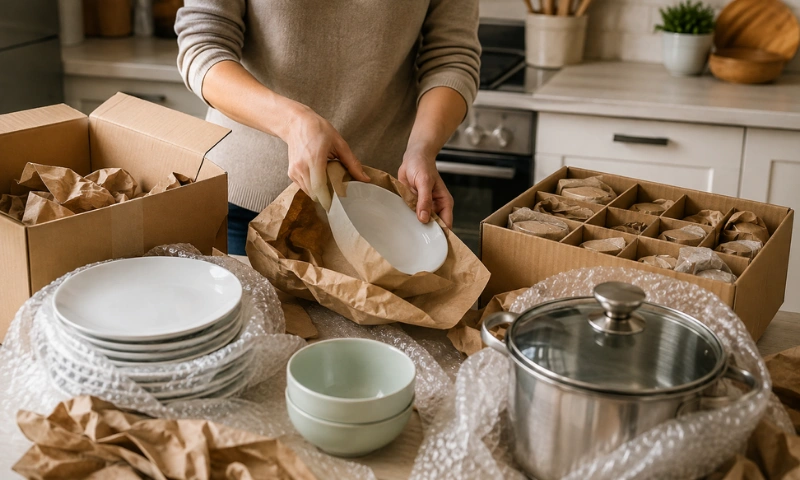
Packing the kitchen can be one of the most challenging parts of preparing for a move. Unlike other rooms, the kitchen has a mix of fragile, heavy and oddly shaped items, including plates, glasses, cookware, appliances, utensils and pantry supplies. Without a clear plan, it is easy to overfill boxes, damage delicate items or leave important things until the last minute.
A good kitchen packing plan starts with decluttering, gathering the right materials and sorting items into categories. Packing this way helps you decide what to keep, makes boxes easier to organise and reduces the risk of damage during transportation. In this guide, we’ll walk you through practical steps for packing everything from dishes and glassware to appliances, pantry items and your everyday kitchen essentials.
What You’ll Need Before Packing Your Kitchen
Before you start filling boxes, gather all the packing materials you’ll need. Having everything ready from the beginning makes the process faster and helps you avoid stopping halfway through because you have run out of supplies.
- Small boxes: Best for heavy items such as canned food, dishes and cookware.
- Medium boxes: Suitable for pots, pans, mixing bowls and small appliances.
- Packing paper: Use it to wrap plates, glasses, mugs and other fragile items individually.
- Bubble wrap: Save it for delicate items such as wine glasses, crystal and particularly fragile kitchenware.
- Packing tape: Use strong tape to securely seal the bottom and top of every box.
- Markers and labels: Clearly write the contents and destination room on each box, and mark fragile boxes as FRAGILE.
- Zip-lock bags: Useful for keeping small accessories, loose parts and opened liquid containers secure.
Having the right supplies ready before you begin can make kitchen packing much more organised and reduce the chance of damage during transportation.
What to Do Before You Start Packing

Before packing your kitchen, take some time to organise what you actually need to move. Decluttering, sorting similar items together and preparing a box of everyday essentials can make the packing process easier and help you avoid unnecessary work later.
1. Declutter Before You Pack
Moving is a good opportunity to remove items you no longer use. Go through your kitchen cabinets, drawers and shelves before you start packing.
- Keep: Set aside the dishes, cookware, appliances and utensils you use regularly.
- Donate: Consider donating useful items you no longer need or have duplicates of.
- Discard: Remove expired food, broken dishes, damaged containers and unusable items.
Every item you remove now is one less thing to pack, carry and unpack at your new home.
2. Sort Your Kitchen by Category
Once you have decided what you are taking, group similar items together before putting them into boxes. This makes it easier to choose the right packing materials and keeps your kitchen organised throughout the move.
Group items such as:
- Plates and bowls
- Glasses and mugs
- Pots and pans
- Cutlery and utensils
- Kitchen appliances
- Pantry items
3. Prepare a Kitchen Essentials Box
Set aside a separate box with the items you will need during your first day or two in your new home. This saves you from opening several boxes just to find basic kitchen supplies.
Include a few plates, bowls, mugs, glasses and basic cutlery, along with items such as a coffee maker, coffee or tea, dish soap, a sponge and paper towels. Label the box “Kitchen Essentials – Open First” and keep it easy to access during the move.
How to Pack Different Kitchen Items

Each type of kitchen item needs a slightly different packing method. Fragile dishes need cushioning, glassware needs separation, appliances need secure packaging, and heavy pantry items need suitable boxes. Packing each category correctly can help reduce movement and damage during transportation.
1. Plates and Bowls
Plates and bowls can crack when they are packed incorrectly, especially if they are stacked flat and exposed to pressure. The right positioning and enough cushioning can make a significant difference.
- Wrap each piece: Wrap plates and bowls individually with packing paper before placing them in the box.
- Pack plates vertically: Stand plates on their edges rather than laying them flat. This helps distribute pressure more evenly during transportation.
- Cushion the bottom: Add a thick layer of crumpled packing paper to the bottom of the box before placing the dishes inside.
- Fill the gaps: Add more paper around the sides and between items so the dishes cannot shift during the move.
- Mark the box: Clearly label it “FRAGILE – DISHES” so it can be handled carefully.
2. Glasses and Mugs
Glassware is particularly vulnerable to knocks and movement during a move. Each glass or mug should have its own protective wrapping, and there should be enough cushioning to prevent pieces from hitting one another.
- Wrap individually: Use packing paper around each glass and mug. For particularly delicate glassware, add an extra layer of protection.
- Protect the inside: For glasses, place some soft packing paper inside the opening before wrapping the outside.
- Use dividers when possible: Cardboard dividers can help keep wine glasses and other delicate pieces separated.
- Pack mugs carefully: Give extra attention to the handles, as they are often the most vulnerable part.
- Avoid mixing heavy items: Do not place heavy cookware or canned food in the same box as delicate glassware.
Packing tip: Fill any empty spaces with crumpled packing paper so the glasses cannot move around inside the box.
3. Kitchen Appliances
Kitchen appliances can be heavy, awkward and difficult to protect if they are not packed properly. Clean and dry each appliance before packing, then remove loose parts and secure cables where possible.
- Small appliances: Wrap items such as kettles, toasters, blenders and coffee makers with packing material. Use the original packaging if you still have it.
- Secure removable parts: Remove detachable blades, trays and other loose components and pack them separately where necessary.
- Protect the cords: Coil cables neatly and secure them so they do not become tangled or damaged.
- Larger appliances: Use strong boxes and fill empty spaces with suitable padding to prevent the appliance from moving.
- Refrigerator: Empty and clean the fridge before the move. Defrost it when necessary, allow it to dry completely and secure the doors for transportation.
For large or heavy appliances, professional moving and packing services can provide the equipment and experience needed to move them safely without putting unnecessary strain on you or risking damage to your home.
4. Knives and Sharp Objects
Sharp kitchen tools need extra care because they can damage other belongings or cause injuries if they are left loose inside a box. Never place knives or other sharp utensils directly into a moving carton.
Wrap each knife individually using several layers of packing paper or another suitable protective material. Secure the wrapping so it stays in place, then place the knives together in a sturdy container. Clearly label the box “SHARP ITEMS – HANDLE WITH CARE” so anyone handling it knows what is inside.
5. Pantry Items
Pantry items can often be packed earlier than other kitchen belongings, making them a good place to start. Sort food by weight and type, and avoid filling large boxes with heavy items.
- Canned goods: Use small, sturdy boxes because cans become very heavy when packed together.
- Dry food: Keep sealed food in its original packaging where possible and use suitable boxes.
- Liquids: Secure bottle caps and place opened bottles in leak-resistant bags to help prevent spills.
- Glass bottles: Wrap fragile bottles individually and keep them upright inside the box.
- Check expiry dates: Throw away expired or unwanted food rather than spending time and space packing it.
The goal is to keep pantry boxes secure, manageable and easy to identify when they arrive at your new home.
Prepare Your Kitchen for Moving Day
Once everything is packed, a few final checks can help make moving day smoother. Make sure the kitchen is ready for the movers and that important items are easy to identify and access.
- Seal and label every box: Check that all boxes are securely taped and clearly labelled before the movers arrive.
- Keep liquids secure: Make sure bottles are tightly closed and placed in leak-proof bags where needed.
- Finish with the refrigerator: Empty, clean and defrost the refrigerator if required. Allow it to dry before transportation.
- Keep your essentials box separate: Set aside your “Kitchen Essentials – Open First” box so it is easy to access when you arrive.
- Clear the moving path: Remove loose items, rugs or other obstacles from hallways and doorways.
- Separate fragile boxes: Keep boxes containing glassware, dishes and other delicate items clearly marked for careful handling.
A little preparation before the movers arrive can help prevent delays and make it easier to get your kitchen organised at your new home.
What to Avoid When Packing Your Kitchen

Even with a good packing plan, a few common mistakes can make moving your kitchen harder or increase the risk of damage. Avoiding these problems can help keep your boxes safer and make unpacking easier.
- Packing before decluttering: Remove unwanted and expired items first.
- Using oversized boxes for heavy items: Use smaller boxes for dishes, cookware and canned food.
- Packing plates flat: Pack them vertically with proper cushioning.
- Leaving empty spaces: Fill gaps so items cannot shift during transport.
- Mixing heavy and fragile items: Keep heavy cookware away from delicate glassware.
- Leaving sharp items loose: Wrap knives and other sharp utensils securely.
- Forgetting to label boxes: Mark fragile boxes and identify their contents.
- Packing essentials too early: Keep a separate kitchen essentials box for your first day.
When Should You Hire Professional Movers?
Packing a kitchen can take a lot of time, especially when you have fragile dishes, heavy cookware and large appliances to handle. Professional movers can make the process easier by helping with careful packing, lifting, loading and transportation.
Professional moving help can be especially useful if you:
- Have heavy appliances: Large refrigerators, ovens and other appliances can be difficult to move safely.
- Have fragile kitchenware: Glassware, dishes and valuable items may need extra care and protection.
- Have limited time: Professional help can reduce the amount of time you need to spend packing and preparing.
- Are moving a large kitchen: More belongings usually mean more boxes, packing materials and lifting.
- Need packing assistance: Movers may be able to help pack and protect your kitchen items before transportation.
- Want to reduce physical strain: Professional equipment and experience can make heavy lifting safer and easier.
If you are unsure about handling heavy or fragile kitchen items yourself, professional moving support can help make the process more organised and less stressful.
Frequently Asked Questions
How far in advance should I start packing my kitchen?
It is best to start early rather than leaving the entire kitchen until the last few days. Begin with items you rarely use, such as seasonal cookware and extra dishes, and leave everyday essentials until closer to moving day.
What is the best way to pack plates for moving?
Wrap each plate individually with packing paper and place them vertically inside a sturdy box. Add cushioning underneath and around the plates to prevent them from shifting during transportation.
How should I pack glasses and mugs?
Wrap each glass and mug separately and use dividers for delicate glassware where possible. Add soft packing material to fill empty spaces and keep heavy items away from fragile glassware.
Should I pack kitchen appliances in their original boxes?
If you still have the original packaging, it can be a good option because it is designed to fit the appliance. If the original box is unavailable, use a sturdy box with suitable padding to prevent movement.
Conclusion
Packing your kitchen properly can make moving day much easier and help protect your dishes, glassware, cookware, appliances and pantry items. Start by decluttering, gather the right packing materials and organise your belongings by category before you begin.
Use suitable boxes and protective materials for fragile and heavy items, keep sharp objects safely wrapped, and prepare a kitchen essentials box for your first day in your new home. Taking these steps can make packing and unpacking more organised and reduce the risk of damage during transportation.
Planning a move in Auckland? Contact Us today to discuss your moving requirements and get professional help with your move.