


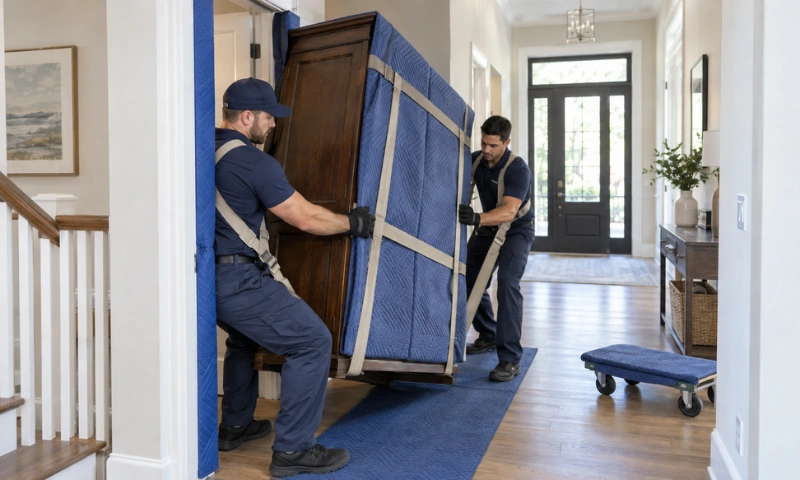
Moving heavy furniture through tight spaces can be challenging, especially when dealing with narrow doorways, small hallways, tight corners or stairs. Without proper planning, furniture can get scratched or damaged, while walls and floors may also be affected.
The key to moving heavy furniture safely is to plan the route, measure the available space, use suitable equipment and move slowly. If you need help with large or difficult-to-move items, our furniture moving services can help make the process safer and easier.
Why Is Moving Heavy Furniture Through Tight Spaces Difficult?

Heavy furniture can be difficult to move when there is limited room to lift, turn or adjust the item. A piece that fits easily in an open room may become challenging when it reaches a narrow doorway or tight corner.
Common challenges include:
- Narrow doorways: Large furniture may have very little clearance.
- Tight hallways: Limited space makes turning and repositioning difficult.
- Sharp corners: Furniture can easily hit walls or door frames.
- Stairs: Heavy items require extra control and careful coordination.
- Uneven or slippery surfaces: These can make lifting and moving less stable.
- Risk of damage: Walls, floors, doors and the furniture itself can be scratched or damaged.
Planning the route and checking the available space before moving can help make the process safer and more manageable.
How to Prepare Before Moving Heavy Furniture

Before lifting or moving heavy furniture, take a few minutes to prepare the furniture and the moving route. Good preparation can make the move safer and help prevent damage.
Measure the Furniture and Access Points
Measure the furniture and compare its dimensions with doorways, hallways, corners and stairways. Check the available height and width so you know whether the furniture can pass through without forcing it.
Plan the Moving Route
Choose the safest route from the current location to the destination. Check for tight turns, stairs, narrow passages and obstacles before you start moving.
Clear the Path
Remove boxes, rugs, decorations and other objects from the route. A clear path gives movers enough space to walk and handle the furniture safely.
Protect Floors, Walls and Door Frames
Use moving blankets, floor coverings and protective padding where needed. Pay extra attention to corners, door frames and other areas that could be damaged during the move.
Should You Disassemble Heavy Furniture Before Moving?
Disassembling furniture can make large or bulky pieces easier to handle, especially when moving them through narrow doorways, hallways or tight corners. However, not every piece needs to be taken apart.
Furniture That May Need Disassembly
Consider disassembling furniture when it is:
- Too large to fit through the planned route
- Difficult to lift or carry safely
- Made with removable legs, shelves or panels
- Easier to manoeuvre in smaller sections
Common examples include wardrobes, large tables, bed frames, cabinets and shelving units.
Keep Screws and Parts Organised
Place screws, bolts and other small parts in a labelled bag or container. Keep them with the furniture so everything is easy to find when it is time to reassemble the furniture at the new location.
What Equipment Helps Move Heavy Furniture Safely?
Using the right equipment can make heavy furniture easier to lift, move and control, especially in narrow areas. The equipment you need will depend on the furniture’s size, weight and moving route.
Equipment | How It Helps |
Furniture dolly | Helps move heavy furniture across floors |
Moving blankets | Protect furniture from scratches and bumps |
Furniture sliders | Make heavy furniture easier to move across suitable floors |
Lifting straps | Help improve control when lifting and carrying |
Corner protectors | Help protect furniture edges and nearby walls |
Floor coverings | Help reduce the risk of scratches and marks on floors |
How to Move Heavy Furniture Through Tight Spaces
Once the furniture and route are prepared, use a slow and controlled approach. Avoid rushing or forcing the furniture through a space that is too narrow.
Step 1: Check the Route Before Lifting
Confirm the planned route and make sure there is enough clearance at doorways, corners, hallways and stairs.
Step 2: Remove Obstacles
Clear anything that could block movement or create a trip hazard. Make sure everyone involved has enough room to move safely.
Step 3: Protect the Furniture
Wrap the furniture with moving blankets or suitable protective materials, paying extra attention to corners and delicate surfaces.
Step 4: Use the Right Moving Equipment
Use equipment such as a furniture dolly, sliders or lifting straps where appropriate. This can make heavy furniture easier to control.
Step 5: Tilt and Rotate Carefully
When space is limited, carefully tilt, turn or rotate the furniture to find the safest position for passing through the opening. Never make sudden movements.
Step 6: Move Slowly and Communicate
Everyone handling the furniture should communicate clearly before lifting, turning or changing direction. Move slowly rather than relying on force.
Step 7: Check Clearance as You Move
Stop when approaching walls, door frames or corners and check the clearance again. This helps prevent scratches, dents and other damage during the move.
How to Move Heavy Furniture Through Narrow Doorways

Narrow doorways can make heavy furniture difficult to manoeuvre, but careful preparation can make the process much safer. Measure the furniture and doorway first, then decide whether the item needs to be tilted, rotated or partially disassembled.
- Measure the doorway: Check the width and height of the opening against the furniture dimensions.
- Remove obstacles: Clear nearby items and create enough space to approach the doorway.
- Protect the doorway: Use padding or moving blankets to reduce the risk of marks and damage.
- Remove the door if appropriate: Taking the door off its hinges can sometimes provide additional clearance.
- Tilt and rotate carefully: Change the furniture’s angle gradually rather than forcing it through.
- Use enough help: Heavy or awkward furniture should not be handled by one person when additional assistance is needed.
If the furniture cannot pass safely without excessive force, stop and reassess the route rather than risking damage or injury.
How to Move Heavy Furniture Around Tight Corners
Tight corners can be one of the most difficult parts of moving heavy furniture. The safest approach is to plan the turn before lifting and make small, controlled movements.
- Check the turning space: Make sure there is enough room to rotate the furniture.
- Choose the right angle: Tilt or rotate the item gradually instead of trying to turn it all at once.
- Protect walls and corners: Use moving blankets or padding around vulnerable areas.
- Move one step at a time: Pause whenever the furniture gets close to a wall or corner.
- Communicate clearly: Everyone should know when to lift, turn, stop or reposition.
- Avoid forcing the furniture: If it does not clear the corner, reassess the route or consider disassembly.
Taking your time helps maintain better control and reduces the risk of damaging the furniture, walls or floors.
How to Protect Floors and Walls When Moving Heavy Furniture
Heavy furniture can easily leave scratches, dents or marks if the moving route is not properly protected. Preparing the surrounding area before moving can help reduce the risk of property damage.
- Cover the floors: Use suitable floor coverings along the moving route.
- Protect walls: Add padding to areas where furniture may come close to walls.
- Protect door frames: Use moving blankets or protective padding around narrow doorways.
- Cover furniture edges: Pay extra attention to sharp corners and exposed edges.
- Avoid dragging: Use suitable moving equipment instead of dragging heavy furniture across the floor.
- Keep the route clear: Remove objects that could cause the furniture to hit walls or other surfaces.
A properly protected route gives you more room to move heavy furniture safely and with better control.
Common Mistakes to Avoid When Moving Heavy Furniture
Moving heavy furniture through tight spaces requires patience and proper planning. Avoiding common mistakes can help prevent injuries and reduce the risk of damage.
- Skipping measurements: Always check the furniture and access points before moving.
- Moving without a plan: Decide on the safest route before lifting.
- Using too few people: Heavy or awkward furniture may require additional help.
- Dragging furniture: Dragging can damage floors and make the furniture harder to control.
- Rushing the move: Fast movements can increase the chance of accidents and damage.
- Ignoring walls and door frames: Protect surrounding surfaces before starting.
- Using unsuitable equipment: Choose equipment that matches the furniture and moving conditions.
- Forcing furniture through tight spaces: If the furniture does not fit safely, stop and reassess the route.
When Should You Hire Professional Furniture Movers?
Moving heavy furniture through tight spaces can become risky when there are narrow doorways, stairs, difficult corners or limited access. Professional movers have the experience and equipment to handle these challenges more safely.
Consider hiring professional furniture movers when:
- The furniture is very heavy, large or awkwardly shaped
- It needs to pass through narrow doorways or tight hallways
- There are stairs or difficult access points
- The furniture is valuable, fragile or difficult to disassemble
- You do not have enough people or suitable equipment
- You want to reduce the risk of damage to your furniture and property
For difficult furniture moves, getting professional help can make the process safer, more efficient and less stressful.
Frequently Asked Questions
How do you move heavy furniture through a narrow doorway?
Measure both the furniture and doorway first. Clear the route, protect the door frame, and carefully tilt or rotate the furniture if there is enough clearance.
Should I disassemble heavy furniture before moving it?
Disassembly can help when furniture is too large or awkward to move as one piece. Items such as wardrobes, bed frames, tables and cabinets may be easier to handle in sections.
How do you move heavy furniture without damaging the floor?
Use suitable floor coverings, furniture sliders or moving equipment instead of dragging furniture directly across the floor.
What equipment is best for moving heavy furniture?
A furniture dolly, moving blankets, sliders and lifting straps can help make heavy furniture easier to handle, depending on the item and moving route.
Conclusion
Moving heavy furniture through tight spaces safely requires careful planning, proper measurements and the right moving techniques. Preparing the route, protecting surfaces, using suitable equipment and communicating clearly can help reduce the risk of damage and injury.
If the furniture is particularly heavy, bulky or difficult to manoeuvre, professional help can make the move safer and more efficient.
Need help moving heavy furniture in Auckland? Contact Faithway Movers for reliable furniture moving services and let an experienced team handle the heavy lifting.