


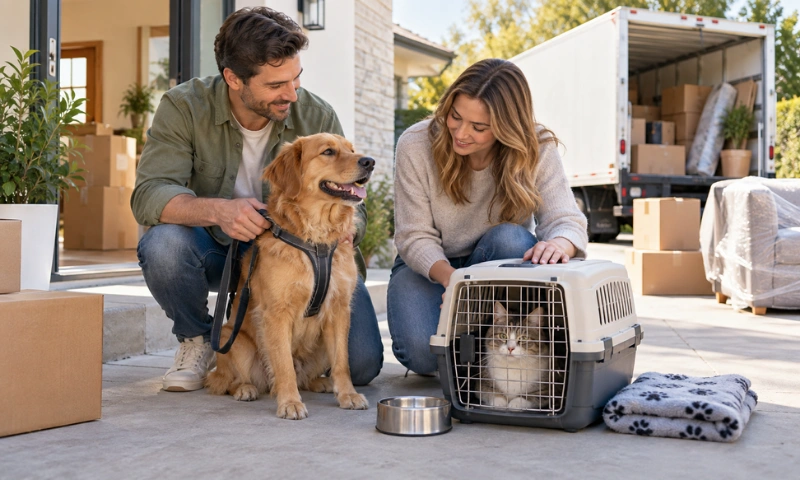
Moving house can be stressful for pets because their familiar surroundings, routine and daily environment suddenly change. Packing boxes, moving furniture, unfamiliar people and extra noise can make the process confusing for dogs, cats and other animals.
With some preparation, you can make moving day safer and more comfortable for your pet. Keeping their routine familiar, preparing their essentials and giving them a quiet, secure space can help them adjust before, during and after the move.
Why Can Moving House Be Stressful for Pets?
Moving house can be a major change for pets because they are used to familiar surroundings, smells and daily routines. When these things suddenly change, pets may feel unsettled or anxious.
Common changes during a move include:
- Boxes and packing materials around the home
- Furniture being moved or removed
- New people entering the house
- Increased noise and activity
- Changes to normal feeding and walking times
- New smells and unfamiliar surroundings
Every pet reacts differently. Some may become quieter and hide, while others may become restless or more nervous than usual. Recognising these changes early can help you take simple steps to keep your pet comfortable and reduce stress throughout the move.
How to Prepare Your Pet Before Moving Day
Start preparing your pet before the actual moving day rather than making changes at the last minute. Keeping their environment and routine familiar can help them feel more comfortable while you pack and organise the house.
Keep Their Daily Routine Consistent
Try to maintain the same feeding, walking and play times. Even when your home is becoming busy with packing, familiar routines can give your pet a sense of normality.
Introduce Moving Boxes Gradually
Place a few boxes around the house before you start packing everything. This allows your pet to become familiar with the boxes and other changes instead of suddenly seeing a completely different environment.
Keep Familiar Items Available
Do not pack your pet’s favourite bedding, toys or other comfort items too early. These familiar belongings can help your pet feel more secure during the moving process.
Check Identification and Pet Records
Before moving, make sure your pet’s microchip information, registration details and identification tags are up to date. Keep vaccination and veterinary records somewhere you can easily access them.
Prepare a Separate Pet Bag
Pack your pet’s food, bowls, bedding, toys, medication, lead or carrier separately from the rest of your belongings. Keep this bag with you so their essentials are available as soon as you arrive.
Planning these details ahead of time means you can focus on the move while your pet has the familiar items and routine they need.
How to Keep Your Pet Safe on Moving Day
Moving day can be busy and unpredictable. Movers may be carrying heavy furniture, doors may stay open, and vehicles may be moving in and out of the property. Keeping your pet away from this activity is one of the easiest ways to prevent accidents or escapes.
The safest option is to arrange a quiet, secure place for your pet before the movers arrive.
Create a Quiet Room
Choose a room away from the main moving activity and keep your pet there with the door closed. Add familiar bedding, toys, food and water so the space feels comfortable.
Consider a Pet Sitter
If possible, ask a trusted friend, family member or pet sitter to look after your pet for the day. This can keep them completely away from the noise and movement of the house.
Tell the Moving Team
Let the movers know that you have a pet and where they are being kept. This helps everyone understand that the room or area should remain secure while furniture and boxes are being moved.
Check Doors and Gates
Before loading begins, check that doors, windows and gates are properly secured. Continue checking them throughout the move, especially when people are carrying items in and out.
A quiet and secure arrangement allows the moving team to work efficiently while giving your pet a calmer space away from the disruption.
What to Pack in Your Pet Essentials Bag

Your pet should have a separate bag for moving day, just like you would prepare an essentials bag for yourself. Keep it with you rather than placing it in the moving truck so you can access everything easily during the journey.
Pack the items your pet is likely to need throughout the day:
- Food and treats
- Water and bowls
- Lead, harness or secure carrier
- Favourite toys
- Bedding or familiar blanket
- Any required medication
- Waste bags or litter supplies
- Grooming supplies
- Pet records and important documents
Having these essentials ready means you will not need to search through packed boxes when your pet needs food, water, comfort or other supplies.
How to Travel With Your Pet to Your New Home
Moving day travel should be planned to keep your pet secure and as comfortable as possible. Whether you are travelling across Auckland or making a longer journey, keep your pet with you and prepare everything they may need.
- Use a secure carrier or harness: Choose a suitable carrier or travel harness and make sure your pet is safely secured before starting the journey.
- Keep essentials nearby: Carry food, water, bowls, medication, bedding and other necessary items in an easily accessible pet bag.
- Plan breaks: For longer journeys, stop regularly where appropriate so your pet can have water, exercise and toilet breaks.
- Avoid large meals before travelling: A large meal immediately before the journey may cause discomfort or motion sickness.
- Keep the environment comfortable: Avoid unnecessary noise and sudden changes that may make your pet more anxious.
- Never leave your pet alone in a parked vehicle: Keep your pet with you whenever you stop during the journey.
For longer or more complicated trips, speak with your veterinarian if you have concerns about your pet’s individual travel needs.
What to Do When You Arrive at Your New Home

Arriving at a new home is another important stage of the move. Before allowing your pet to explore, make sure the new environment is safe and set up a familiar space where they can relax.
- Check the property first: Look for open gates, gaps in fences, unsecured windows, loose cables or other potential hazards.
- Prepare a quiet room: Set up one secure area with their bed, food, water, toys and other familiar belongings.
- Keep doors and windows secure: With people moving boxes in and out, make sure your pet cannot accidentally escape.
- Introduce the home gradually: Let your pet become comfortable in one area before giving them access to the rest of the house.
- Keep familiar items nearby: Their usual bedding, toys and feeding bowls can make the new surroundings feel more familiar.
- Give them time: Avoid forcing your pet to explore. Allow them to adjust at their own pace.
A calm first few hours can help your pet feel more secure while you finish settling into your new home.
How to Help Your Pet Settle Into a New Home
Once the move is complete, your pet may need some time to become comfortable with the new surroundings. Try not to rush the process. Familiar routines and belongings can make the transition easier.
- Keep their routine familiar: Continue regular feeding, walking and play times as much as possible.
- Set up familiar belongings first: Place their bed, toys, bowls and blankets in a quiet area.
- Introduce new areas gradually: Let your pet explore the new home at their own pace rather than giving them access to everything immediately.
- Give extra reassurance: Spend some calm time with your pet and allow them to stay close to familiar people.
- Watch for changes in behaviour: Temporary changes in eating, sleeping, confidence or toileting can happen while pets adjust.
- Be patient: Some pets settle quickly, while others may need more time to feel comfortable in their new surroundings.
Keeping familiar routines and introducing the new environment gradually can help your pet build confidence after the move.
Important Pet Documents to Keep With You
Pet-related documents are easy to overlook when packing, but some may be needed during travel or after arriving at your new home. Keep them in a safe place with you instead of putting them inside a moving box.
Document | Why You May Need It |
Vaccination records | Useful when registering with a new veterinarian |
Microchip details | Helps keep your pet’s identification information current |
Veterinary records | Provides important health and treatment history |
Registration details | Helps update your pet’s information after moving |
Ownership or adoption documents | Useful if proof of ownership is required |
Before moving, check that the information on your pet’s records is current. Keeping these documents accessible means you can find them quickly if they are needed during or after the move.
Moving With Multiple Pets
Moving with more than one pet requires some extra planning, especially when each animal may react differently to the change. Keeping their spaces organised can help make moving day calmer and safer.
- Give each pet a secure space: Use separate carriers or secure areas when appropriate, particularly during the busiest parts of the move.
- Prepare individual essentials: Keep each pet’s food, medication, bedding and other important items easy to identify.
- Consider their individual needs: Some pets may be more anxious than others and may need extra space or reassurance.
- Plan the journey in advance: If travelling by car, decide where each pet will be safely positioned before leaving.
- Keep them secure during loading: Make sure pets are safely away from open doors and moving furniture while the movers are working.
A little extra organisation can help prevent confusion and make the moving process more manageable for both you and your pets.
Common Mistakes to Avoid When Moving With Pets
Even a well-planned move can become stressful if a few important details are overlooked. Avoiding these common mistakes can help keep your pet safe and make moving day easier.
Leaving your pet loose: Keep pets in a secure room or carrier while movers are carrying furniture and boxes.
Leaving doors or gates unsecured: Check doors, windows and gates regularly to reduce the risk of your pet escaping.
Packing pet essentials away: Keep food, water, medication, bedding and other important supplies with you instead of placing them in the moving truck.
Changing their routine: Try to maintain normal feeding, walking and sleeping times throughout the moving process.
Feeding a large meal before travelling: Avoid giving a large meal immediately before the journey, as it may cause discomfort.
Forgetting important records: Keep vaccination records, microchip details and veterinary documents accessible during the move.
Skipping the safety check: Check the new home for open gates, gaps, loose cables and other hazards before allowing your pet to explore.
Expecting immediate adjustment: Give your pet time to become comfortable with the new surroundings and allow them to settle at their own pace.
Conclusion
Moving house with pets requires a little extra planning, but the right preparation can make the experience much easier for both you and your pet. Keeping their routine familiar, providing a safe space on moving day, securing them during travel and giving them time to settle can help reduce stress.
Before the move, make sure your pet’s essentials, identification details and important records are up to date. Once you arrive, introduce them to their new surroundings gradually and maintain their usual feeding and walking routines as much as possible.
Planning a move with your pet? Contact Faithway Movers to discuss your moving requirements and make your relocation more organised from start to finish.