


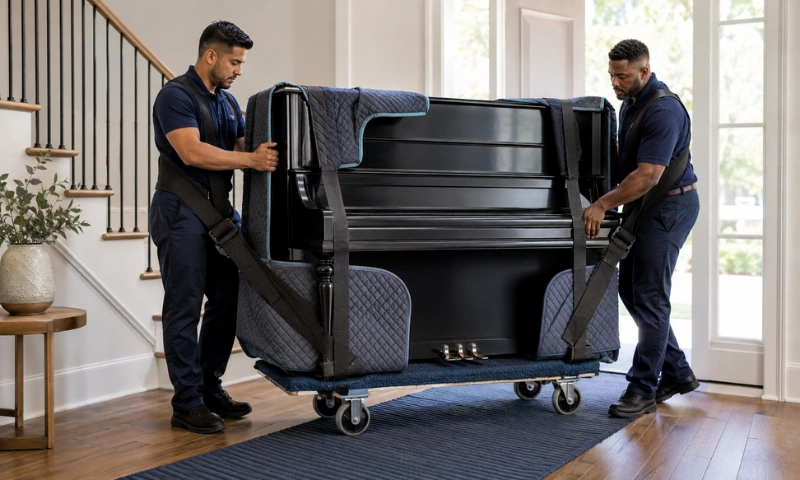
Moving a piano is very different from moving ordinary furniture. Pianos are heavy, difficult to balance and contain delicate internal components that can be damaged by sudden movement or improper handling. Their size and shape can also make doorways, narrow hallways, stairs and tight corners more challenging to navigate.
With the right preparation, equipment and moving technique, many of these risks can be reduced. This guide explains how to move a piano safely, from preparing the route and protecting the instrument to handling difficult spaces and securing it for transportation.
Why Is Moving a Piano Different From Regular Furniture?
A piano may look like another large piece of furniture, but its weight, shape and internal construction make it much more difficult to move safely. Unlike a sofa or cabinet, a piano can be both extremely heavy and surprisingly delicate.
Here are the main challenges:
- Heavy and difficult to balance: Pianos can weigh hundreds of pounds, making them difficult to lift, control and manoeuvre safely.
- Awkward shape: Their size and shape can make narrow doorways, hallways and sharp turns difficult to navigate.
- Delicate internal components: Inside the case are strings, hammers and other precision components that can be affected by sudden impacts or rough handling.
- Limited grip: Pianos do not have convenient handles, making it harder to maintain control while moving them.
- Risk to surrounding property: An uncontrolled piano can damage flooring, walls, door frames and stairs as well as the instrument itself.
Because of these challenges, piano moving requires more than physical strength. Proper preparation, suitable equipment and controlled handling are important for reducing the risk of injury or damage.
Understanding Your Piano Before the Move

Before preparing your piano for transportation, consider its type, size and overall design. Different pianos have different shapes and weight distributions, so the moving method and level of protection may vary.
Upright Pianos
Upright pianos are tall and relatively narrow, but their height and weight can make them difficult to balance and maneuvre through tight spaces.
Baby Grand Pianos
Baby grands are wider and have exposed legs and pedal components that require additional protection. Depending on the route, some parts may need to be carefully secured or removed before moving.
Grand Pianos
Grand pianos are larger and heavier, making them more difficult to turn and transport through narrow areas. Their size may require specialised equipment and careful route planning.
Digital Pianos
Digital pianos are generally lighter than acoustic pianos but still contain delicate electronic components. They should be properly protected and secured during transportation.
How to Prepare a Piano for Moving

Before the piano is lifted, take time to prepare both the instrument and the moving route. Proper preparation helps prevent scratches, access problems and unnecessary handling risks.
1. Measure the Moving Route
Measure the piano and check all areas it will need to pass through, including:
- Doorways and entrances
- Hallways and corners
- Staircases and landings
- Elevators
- Driveways and outdoor paths
Make sure there is enough clearance to move the piano without forcing it through tight spaces.
2. Clear the Path
Remove furniture, boxes, rugs and other obstacles from the planned route. Keep doors open where possible and make sure the moving team has enough room to manoeuvre safely.
3. Protect the Piano and Property
Cover the piano with suitable moving blankets or padding to protect its finish from scratches and impact. Floors, walls, door frames and corners should also be protected, especially along narrow or difficult routes.
4. Prepare Removable Parts
Depending on the piano type, some components may need to be secured or removed before transportation. Parts such as music stands, legs or other detachable components should be handled carefully and stored securely.
For complex or valuable pianos, professional movers should handle disassembly to avoid damaging the instrument.
What Equipment Is Needed to Move a Piano?
Moving a piano safely requires more than standard household moving tools. Specialised equipment helps the moving team maintain control, protect the piano and reduce the risk of damage during handling and transportation.
Equipment | Purpose |
Piano Dolly | Provides a stable base for moving the piano across suitable surfaces. |
Piano Board / Skid Board | Supports and stabilises the piano during certain moves. |
Moving Straps | Help control and secure the piano during handling. |
Moving Blankets & Padding | Protect the piano’s finish from scratches, bumps and impact. |
Ramps / Lift Equipment | Assist with loading, unloading and difficult changes in height. |
How to Move a Piano Safely

Moving a piano should be approached carefully from the initial assessment through to final placement. Each stage helps reduce the risk of damage to the piano, property and people involved.
1. Assess the Piano and Moving Route
Before moving anything, check the piano’s size, weight and type, then inspect the complete route to the moving vehicle. Measure doorways, hallways, stairs, corners and other restricted areas.
Make sure there is enough clearance for the piano and enough space for the moving team to work safely.
2. Protect and Wrap the Piano
Cover the piano with suitable moving blankets and protective padding before it is moved. Secure the covering so it stays in place during handling.
Pay particular attention to:
- Corners and edges
- Legs and other exposed parts
- Keyboard and delicate surfaces
- Areas that could rub against walls or door frames
Proper wrapping helps reduce scratches, marks and impact damage during the move.
3. Handle Stairs and Difficult Access Carefully
Stairs, narrow hallways and tight turns can make piano moving significantly more difficult. The moving team should plan the route and coordinate each movement before lifting or repositioning the piano.
Avoid rushing or making sudden movements. Difficult access may require additional equipment and experienced movers to maintain control.
4. Load and Secure the Piano
Once the piano reaches the moving vehicle, it should be loaded carefully using suitable equipment such as ramps or lift equipment where required.
After loading, secure the piano properly so it cannot shift during transportation. Protective padding should remain in place to reduce contact and impact while the vehicle is moving.
5. Transport the Piano Safely
During transportation, the piano should remain securely positioned and protected from unnecessary movement. Careful loading and securement help reduce the risk of damage caused by sudden stops, turns or road movement.
6. Position the Piano at the New Location
At the destination, check the route again before unloading. Move the piano carefully into its intended position and avoid dragging it across the floor.
Once it is placed correctly, remove the protective materials carefully and check the piano for any visible signs of damage.
Common Piano Moving Mistakes to Avoid
Even a small mistake can cause damage when moving a heavy and delicate piano. Avoiding these common problems can make the process safer and more controlled.
- Trying to move the piano alone: A piano is too heavy and awkward to handle safely without enough manpower.
- Using unsuitable equipment: Standard furniture dollies or basic straps may not provide the stability and control needed for a piano.
- Skipping route measurements: Failing to check doorways, stairs and tight turns can leave the piano stuck or cause property damage.
- Dragging the piano: Dragging can damage flooring and place unnecessary stress on the piano. Use appropriate moving equipment instead.
- Ignoring protection: Moving blankets and padding help protect the piano’s finish, while floor and wall protection can prevent damage to the property.
- Underestimating stairs: Stairs and narrow landings significantly increase the difficulty of a piano move and require careful planning.
- Failing to secure the piano for transport: An unsecured piano can shift during transit, increasing the risk of damage.
When Should You Hire Professional Piano Movers?
Professional piano movers can be a safer choice when the move involves extra weight, difficult access or a valuable instrument. The right support can reduce the risk of injury, property damage and damage to the piano itself.
Consider hiring professional piano movers when:
- The piano is a grand or baby grand: Larger pianos can be more difficult to balance, manoeuvre and protect.
- Stairs are involved: Multiple flights, narrow landings or tight turns can make the move significantly more challenging.
- Access is restricted: Narrow doorways, hallways, entrances or difficult outdoor paths may require specialised equipment and planning.
- The piano is valuable or sentimental: Professional handling can provide greater protection for an instrument that would be expensive or difficult to replace.
- Specialised equipment is needed: Piano boards, dollies, straps, protective padding and other equipment may be required for a controlled move.
- You do not have enough experience or manpower: A piano should not be treated like ordinary furniture, particularly when lifting or navigating difficult areas.
Frequently Asked Questions
Can I move a piano myself?
It is possible for a small, accessible piano move to seem manageable, but pianos are heavy, awkward and difficult to control. If the move involves stairs, tight spaces or a larger piano, professional help is a safer option.
Can piano movers move a piano up or down stairs?
Yes. Professional piano movers can handle stair moves using appropriate equipment, route planning and coordinated lifting techniques. The difficulty depends on the number of stairs, landings, turns and available space.
What equipment is used to move a piano?
Common equipment includes piano dollies, piano boards or skid boards, moving straps, protective blankets, padding and ramps or lift equipment. The equipment used depends on the piano and the moving route.
Does a piano need to be disassembled before moving?
Not every piano needs to be disassembled. However, certain components may need to be removed or secured, particularly on larger pianos, to make handling and transportation safer.
Conclusion
Moving a piano safely requires more planning than moving ordinary furniture. Its weight, shape and delicate internal components make proper preparation, suitable equipment and careful handling important. Measuring the route, protecting the piano, securing it correctly and taking extra care around stairs and tight spaces can help reduce the risk of damage.
For difficult access, large or valuable pianos, or moves that involve stairs, professional piano movers can provide the equipment and experience needed for safer handling. If you are planning a piano move and need professional assistance, Contact Us to discuss your requirements and arrange the right moving solution.