


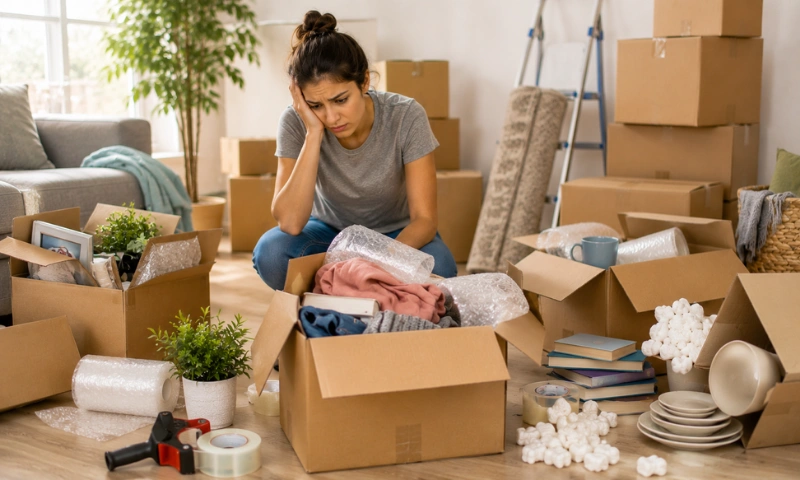
Packing is often the most ignored part of moving. Many people think they can finish it in a day or two, only to end up with broken belongings, misplaced essentials, and boxes that are difficult to unpack. These small packing mistakes can turn an exciting move into a stressful experience, costing you extra time, money, and frustration on moving day.
The good news is that most packing problems are completely avoidable with a little planning. In this guide, we’ll walk you through the five most common packing mistakes people make before moving and share simple tips to help you avoid them. By packing the right way from the beginning, you can protect your belongings, stay organized, and make your move much smoother from start to finish.
Common Packing Mistakes to Watch Out For

Packing may seem simple, but small mistakes can create big problems on moving day. Use the checklist below to avoid common packing errors and keep your move organized from start to finish.
1. Waiting Until the Last Minute
Many people put off packing because they think it won’t take long. However, leaving everything until the final few days often leads to rushed decisions, forgotten belongings, and poorly packed boxes that increase the risk of damage during the move.
What to do instead:
- Create a packing timeline: Divide your packing into smaller tasks and assign a few rooms or items to each day. This makes the process more manageable and less stressful.
- Pack one room at a time: Completing one room before moving to the next helps keep your belongings organized and makes unpacking much easier.
- Start with items you don’t use every day: Begin by packing seasonal clothing, books, decorations, and other non-essential items so you can focus on everyday essentials closer to moving day.
Packing a little each day gives you enough time to organize your belongings properly and reduces the pressure as moving day approaches. A well-planned packing schedule can make your move smoother, safer, and far less stressful.
2. Using the Wrong Packing Materials
Using old, damaged, or low-quality packing materials can put your belongings at risk during the move. Weak boxes may tear under pressure, while poor packing materials may not provide enough protection for delicate items.
What to do instead:
- Use sturdy moving boxes: Choose strong, good-quality boxes that can safely hold the weight of your belongings without collapsing.
- Protect fragile items with bubble wrap: Wrap glassware, electronics, and other delicate items individually to reduce the risk of damage during transport.
- Seal boxes with strong packing tape: Secure each box properly so it stays closed while being lifted, loaded, and unloaded.
- Choose the correct box size: Pack heavy items in smaller boxes and lighter items in larger ones to make lifting easier and prevent boxes from breaking.
Little extra care while packing can save you from costly replacements and unnecessary stress later.
3. Not Labeling Boxes Properly
Skipping labels might seem like a time-saving step, but it often creates confusion when you arrive at your new home. Without clear labels, you’ll spend more time opening multiple boxes just to find the items you need.
What to do instead:
- Write the destination room: Label each box with the room it belongs to, such as the kitchen, bedroom, or bathroom, so it can be placed in the right location.
- Mention what’s inside: Add a short description of the contents, such as “Kitchen Utensils” or “Winter Clothes,” to make unpacking quicker.
- Mark fragile boxes clearly: Write “Fragile” on boxes containing glassware, electronics, or other delicate items so they are handled with extra care.
Taking a few minutes to label every box can save hours during unpacking and help keep your new home organized from day one. It also makes it easier for movers to place your belongings in the correct rooms.
4. Overpacking Heavy Boxes
It may seem like a good idea to fit as many items as possible into one box, but overpacking can make boxes difficult to lift and more likely to tear or break. It also increases the risk of injury when carrying heavy loads and can damage the items packed inside.
What to do instead:
- Spread heavy items across multiple boxes: Divide books, kitchenware, and other heavy belongings into several boxes instead of packing them all together.
- Keep boxes easy to lift: Pack each box to a manageable weight so it can be carried safely by one or two people.
- Place heavier items at the bottom: Pack heavier belongings first and lighter items on top to keep the box stable and protect more delicate items.
Packing balanced boxes makes them easier to carry, load, and unload during the move. It also helps protect your belongings and reduces the chances of boxes breaking in transit.
5. Forgetting to Protect Fragile Items
Fragile items require extra care during packing, as they are more likely to break while being moved. Taking a few additional minutes to pack them properly can help prevent costly damage and give you peace of mind throughout the move.
What to do instead:
- Wrap each fragile item separately: Use bubble wrap, packing paper, or soft towels to protect glassware, ceramics, and other delicate belongings.
- Fill empty spaces inside boxes: Add packing paper or cushioning materials to stop items from shifting during transport.
- Label fragile boxes: Clearly mark boxes containing delicate items so they are handled with extra care.
- Avoid stacking heavy boxes on top: Place fragile boxes on top of heavier ones to reduce pressure and prevent breakage.
Carefully packing delicate belongings helps keep them safe throughout the move. It can save you from the cost and disappointment of replacing damaged items.
When Should You Consider Professional Packing Services?

Not every move is the same. While some people can manage packing on their own, others may find it difficult due to the size of the move, limited time, or the type of belongings they need to pack. In these situations, professional help can make the entire moving process much easier.
You may benefit from professional packing services if you have:
- large home: Packing an entire house can take several days without the right experience or equipment.
- busy schedule: If work, family, or other commitments leave you with little time to pack, professional assistance can save valuable time.
- Fragile or valuable belongings: Delicate items such as glassware, antiques, artwork, and electronics require careful packing to reduce the risk of damage.
- Heavy furniture: Large or bulky furniture often needs proper wrapping and protection before it is moved.
- Children or pets to look after: Managing a move while caring for young children or pets can be challenging, making professional packing a practical choice.
If you want to save time and ensure your belongings are packed securely, our professional moving packing services in auckland can help make your move easier from start to finish.
Quick Packing Checklist Before Moving
Before moving day arrives, take a few minutes to review your packing progress. This simple checklist can help you make sure you’ve covered the essentials and avoid common packing mistakes at the last minute.
- Start packing early: Give yourself enough time to pack without rushing.
- Use quality packing materials: Choose sturdy boxes, strong tape, and protective wrapping for your belongings.
- Label every box: Clearly write the room name and contents to make unpacking easier.
- Protect fragile items: Wrap delicate belongings carefully and label fragile boxes.
- Avoid overpacking: Keep boxes at a manageable weight to prevent damage and make lifting safer.
- Keep an essentials box ready: Pack important items you’ll need on your first day in your new home.
- Double-check every room before leaving: Inspect cupboards, drawers, closets, and storage areas to make sure nothing is left behind.
Using this checklist as a final review can help you feel more prepared before moving day. A few minutes of planning now can save you time, stress, and unnecessary problems later.
Conclusion
Avoiding common packing mistakes can make a significant difference to your moving experience. By starting early, using the right packing materials, labeling your boxes, and protecting fragile belongings, you can save time, reduce stress, and keep your items safe throughout the move. A little planning before moving day can help you stay organized and enjoy a much smoother transition into your new home.
If you need extra support with your move, Faithway Movers is here to help. From carefully packing your belongings to transporting them safely, our experienced team is committed to making your move as simple and stress-free as possible. Contact us today for a free quote and let us take the hassle out of your next move.