


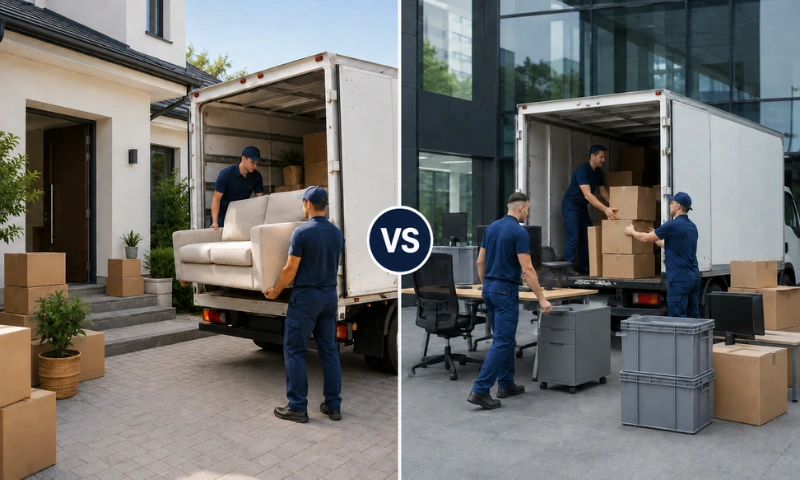
Moving homes and relocating a business may both involve packing, lifting and transportation, but the process can be very different. A residential move mainly focuses on safely transporting personal belongings, furniture and household items, while a commercial move often involves office equipment, technology, documents and business assets.
Understanding these differences can help you choose the right moving service for your needs. In this guide, we’ll compare commercial moving vs residential moving, including planning, costs, equipment, scheduling, insurance and the level of coordination required for each type of move.
What Is Residential Moving?
Residential moving refers to relocating personal belongings from one home to another. It can include houses, apartments, townhouses and other residential properties, with the main focus on safely transporting everyday household items.
A typical residential move may involve:
- Household furniture: Beds, sofas, dining tables, wardrobes and other furniture.
- Personal belongings: Clothing, books, kitchenware, decorations and everyday items.
- Appliances: Refrigerators, washing machines and other household appliances.
- Packing and protection: Boxes, wrapping materials and furniture protection help keep belongings safe during transportation.
- Flexible scheduling: Residential moves can often be planned around the household’s preferred moving date and daily routine.
Because the belongings are mainly personal and household items, residential moving usually requires less coordination than relocating a business. However, the size of the home, amount of belongings and access to the property can still affect the moving process.
What Is Commercial Moving?
Commercial moving involves relocating a business, workplace or commercial property from one location to another. Unlike a household move, it often involves coordinating furniture, technology, business documents, equipment and other assets while keeping disruption to daily operations as low as possible.
A commercial move may involve:
- Office furniture and workstations: Desks, chairs, cabinets, meeting tables and storage units.
- Technology and equipment: Computers, monitors, printers, servers and other business equipment.
- Business documents: Files, records and confidential paperwork that need organised and secure handling.
- Specialised equipment: Larger or heavier items that may require additional protection or suitable moving equipment.
- Detailed planning: Businesses may need to coordinate packing, transportation, building access and setup at the new location.
- Time-sensitive scheduling: Moves may be planned around evenings, weekends or other suitable periods to reduce disruption to business operations.
Because commercial relocations can involve more items, people and coordination, they generally require more detailed planning than a typical residential move. The right commercial moving service can help manage these requirements and keep the relocation organised.
Residential Moving vs Commercial Moving: Key Differences
Before looking at each factor in detail, here is a quick comparison of how commercial and residential moves differ.
Factor | Residential Move | Commercial Move |
Primary Focus | Household belongings and personal property | Business assets, furniture and equipment |
Planning | Usually simpler and property-focused | More detailed and business-focused |
Cost | Based mainly on volume, distance and labour | Depends on scope, equipment, labour and complexity |
Equipment | Standard moving tools and packing materials | May require specialised equipment and protection |
Scheduling | Usually more flexible | Often planned around business operations |
Packing | Household goods and personal items | Furniture, electronics, files and business equipment |
Insurance | Protection for household belongings | May require broader coverage for business assets |
Downtime | Mainly affects household routines | Can directly affect business operations |
Coordination | Usually involves household members | May involve employees, IT teams and building management |

1. Cost and Pricing
The cost of moving depends on the size and complexity of the job, but the factors that influence the price can differ between residential and commercial moves.
Residential move:
The cost is usually based on the volume of household belongings, moving distance, labour and additional services. Packing, furniture disassembly, stairs, elevators and difficult access can increase the time required.
For example, moving a two-bedroom apartment with standard furniture will generally have different requirements from moving a large family home with several rooms of furniture and appliances.
Commercial move:
Commercial moving costs are often affected by the size of the business, number of workstations, equipment, labour requirements, access conditions and moving schedule. Additional handling may be required for computers, printers, servers, large office furniture or specialised equipment.
A larger office may also require the move to be completed in stages or outside normal working hours, which can affect the overall moving plan and cost.
2.Planning and Logistics
Planning is important for every move, but commercial relocations generally involve more coordination.
Residential move:
Planning usually focuses on preparing the home, organising belongings, checking access and deciding when the move will take place. The main objective is to get household items safely from the old property to the new one.
Commercial move:
A commercial relocation may require coordination between business owners, employees, IT teams, building managers and movers. Furniture and equipment may also need to be moved according to departments, workstations or a specific office layout.
A commercial moving plan may include:
- Creating an inventory
- Labelling furniture and equipment
- Planning elevator or loading access
- Coordinating IT equipment
- Deciding the order of relocation
- Preparing the new office layout
This additional planning helps prevent confusion and unnecessary delays.
3. Equipment and Packing Requirements
The type of belongings being moved determines what equipment and protection are needed.
Residential move:
Most household moves involve furniture, appliances, clothing, kitchenware, books and personal belongings. Standard moving supplies such as boxes, moving blankets, furniture pads, dollies and straps are generally suitable.
Commercial move:
Commercial relocations can involve more specialised items, including computers, monitors, printers, servers, office workstations and business equipment. These items may require additional cushioning, secure packaging and careful handling.
For example, computer equipment should be disconnected and cables labelled before packing, while large office equipment may require specialised moving tools.
4. Timeline and Scheduling
The timing of a move can be flexible for a household but much more important for a business.
Residential move:
A residential move can usually be scheduled around the household’s availability. Homeowners may choose a weekday or weekend depending on work, school and other personal commitments.
Commercial move:
Businesses often need to plan the move around their working hours and customer operations. Some relocations may take place after hours, during weekends or in stages to avoid unnecessary disruption.
For example, instead of moving an entire office at once, a business may relocate one department at a time while keeping the rest of the workplace operational.
5. Packing and Protection
Both types of moves require proper packing, but the items and organisation involved can be quite different.
Residential move:
Household belongings are often packed according to rooms. Kitchen items, bedroom belongings, books and clothing can be grouped separately, making it easier to unpack at the new home.
Commercial move:
Office packing usually requires a more structured system. Furniture, equipment and documents may need to be labelled according to departments, employees, workstations or their destination.
For example:
- Office furniture: Protect desks, cabinets and workstations from scratches.
- Electronics: Cushion computers, monitors and printers.
- Documents: Keep business files organised and securely packed.
- Cables: Label cables before disconnecting equipment.
This organisation can make the setup process at the new workplace much faster.
6. Insurance and Liability
The value and type of belongings being moved can affect the protection required.
Residential move:
A residential move generally involves personal belongings such as furniture, appliances, electronics and household items. Before moving, homeowners should understand what protection or coverage applies to their belongings during transportation.
Commercial move:
A commercial move may involve higher-value business equipment, technology, machinery and other company assets. Businesses may also need to meet specific insurance or documentation requirements from a building owner or property manager.
Before booking a commercial moving service, it is worth confirming:
- Available moving coverage
- Liability terms
- Protection for valuable equipment
- Any building documentation requirements
7. Downtime and Business Disruption
This is one of the most important differences between the two types of moves.
Residential move:
A residential move can disrupt a family’s daily routine, but a delay generally does not stop a business from operating.
Commercial move:
A business relocation can affect employees, customers and daily operations if essential furniture, equipment or technology is unavailable.
Businesses can reduce disruption by:
- Moving non-essential items first
- Planning IT disconnection and reconnection
- Preparing the new office before moving day
- Setting up essential workstations first
- Scheduling the move outside peak business hours
The goal is to get the business operating normally again as quickly as possible.
8. Coordination and Workforce
The number of people involved is another major difference.
Residential move:
A residential move is usually managed between the homeowner or family and the moving team. There are fewer people involved in making decisions about packing, timing and furniture placement.
Commercial move:
A commercial relocation can involve management, employees, IT staff, building management and professional movers. Larger businesses may also need different departments to coordinate their own equipment and documents.
This means communication and clearly assigned responsibilities become much more important during a commercial relocation.
Which Type of Moving Service Do You Need?
Choosing between a residential move and a commercial move depends mainly on what you are relocating, how complex the move is and how much coordination is required. Understanding your moving needs can help you choose a service that is better suited to the job.
Choose Residential Moving If…

A residential moving service is usually the right option when you are relocating a home and mainly need to transport personal belongings.
- You are moving homes: Whether you are moving from a house, apartment or townhouse, residential movers can handle household relocations.
- You are moving personal belongings: Your move mainly includes furniture, appliances, clothing, kitchen items, books and other household goods.
- You need household packing: If you need help preparing fragile or bulky household items, packing support can be included where available.
- Your move is relatively straightforward: You do not need to coordinate departments, employees, business equipment or commercial building requirements.
Choose Commercial Moving If…

A commercial moving service is more suitable when you are relocating a business, workplace or other commercial premises.
- You are relocating a business: This can include offices, retail spaces, warehouses and other commercial locations.
- You are moving office equipment: Computers, workstations, printers, filing cabinets and other business equipment may require careful handling.
- You need structured planning: Larger business moves may require inventories, labelling, access arrangements and coordinated scheduling.
- Downtime needs to be limited: If the relocation could interrupt daily operations, a carefully planned commercial move can help reduce disruption.
How to Choose the Right Moving Company
Choosing the right mover depends on the type and requirements of your relocation. Compare experience, services, equipment and pricing before booking.
Check Their Moving Experience
Choose a company experienced with the type of move you need.
- Residential move: Look for experience with household furniture, appliances and personal belongings.
- Commercial move: Check their experience with office furniture, electronics, documents and business equipment.
Ask About Equipment and Services
Make sure the mover has the equipment and services required for your move, such as:
- Moving and lifting equipment
- Protective packing materials
- Furniture disassembly and reassembly
- Packing and loading services
Confirm Insurance and Liability
Understand how your belongings or business assets are protected during the move. Check the available coverage, liability terms and any required building documentation.
Compare Quotes and Moving Plans
Don’t choose a mover based only on the lowest price. Compare what each quote includes, including labour, equipment, additional services and any potential extra charges.
Common Mistakes to Avoid When Choosing a Moving Service
Choosing a mover based only on price can sometimes lead to unexpected costs or service problems. Before booking, take a few simple precautions:
- Choosing only by price: The cheapest quote may not include all the services or equipment you need.
- Not checking experience: Make sure the company has experience with your type of move.
- Ignoring insurance: Understand what protection is available for your belongings or business assets.
- Not confirming services: Check whether packing, furniture disassembly, equipment handling or other required services are included.
- Overlooking access requirements: Confirm details such as stairs, elevators, parking and building access before moving day.
- Leaving planning too late: Give yourself enough time to compare movers, arrange services and prepare for the relocation.
Conclusion
A residential move and a commercial move may involve similar moving tasks, but their requirements can be very different. Residential moves mainly focus on transporting household belongings, while commercial moves often involve office furniture, equipment, documents, detailed planning and business operations. Understanding these differences can help you choose the right moving service for your needs.
Whether you are relocating your home or business, choosing an experienced moving company can make the process more organised and less stressful. If you are planning a move and need professional assistance, Contact Us to discuss your moving requirements.